What to do if you're being interrogated by the police
TLDR: Always assume the interrogation is against you. Invoke the right to remain silent or ask for a lawyer if your jurisdiction permits it. Do not use small talk, remain neutral, don't confirm anything, deny any allegations and answer only what you are asked.
You're sitting at your desk doing your thing on the computer until you hear a knock on the door. At first, you think it's some Mormon missionaries trying to go out of their way to preach to you, so you simply ignore it completely. But then, the phrase of death echoes through your room: "Police open up!". You quickly format all your hard disks to get rid of any evidence. You then make your way to the door and ask the officers if they have a warrant. Instead, they tell you to step outside to have a talk. You have been summoned to the police station to be interrogated because you were a "bystander" to a supposed crime that was committed recently.
What could I have possibly done??
You may think that this whole thing is a setup. And to be honest with you, it probably is. It's actually quite usual in this day and age. However, you are being escorted to the police station as we speak, so you need to act fast.
You currently in one of the two situations:
  - You were truly a bystander to something
  - You did something and they know it was you, but they can't prove it
If you were a bystander to something, it is not necessary that you say 100% of the truth. Just make sure you don't overexaggerate the lies, because they might then catch on.
However, always assume the interrogation is against you. So naturally, we will always be taking the second situation into consideration. Take note though: if they could prove it was you, you would already be in jail. The only reason you are being interrogated is that they do not have sufficient proof against you, and are trying to make you confess to committing a crime.
The right to remain silent
You are now found sitting on the chair of the interrogation room waiting for the interrogator to show up.
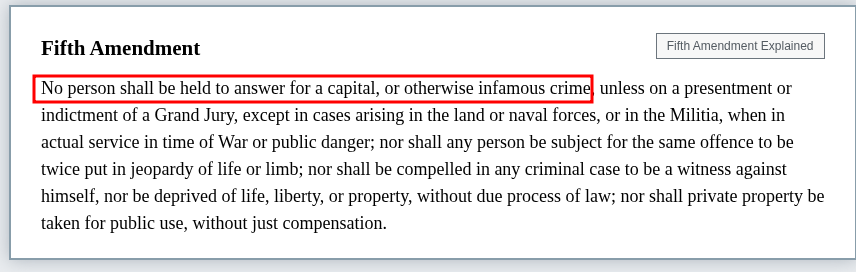
From the hundreds of movies you've watched, the so-called right to remain silent crosses your mind. The right to remain silent is a constitutional right that protects individuals from being compelled to provide testimony or statements that could incriminate them. In the USA, this falls under the fifth amendment rights.
But as always, with something so great, there is always one small catch. Many countries do not give individuals the right to remain silent; it can actually be used against you, in these countries, if you remain silent during an interrogation or any other legal investigation.
Some of the countries include:
  - UK
  - Canada
  - Australia
  - Singapore
  - France
It is very important that you know beforehand if your country gives you the right to remain silent. If you plead the right to remain silent in a country that does not respect that, you are in a way turning yourself in.
Asking for a lawyer
The interrogator has now entered the room and has started questioning you.
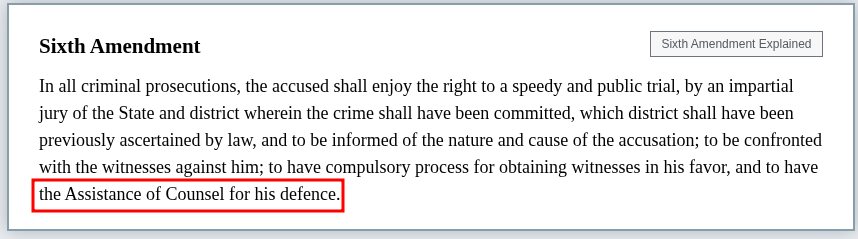
Instead of answering any questions, you ask for a lawyer and refuse to answer anything without one present. This is the right to counsel. This can serve as a substitute for remaining silent for the countries that aren't very fond of it. For example, in the UK, while remaining silent is used against you, your wish to have an attorney present is respected.
However, there are some exceptions. While China may have the right to counsel, it only comes into play during court trial, and is not allowed during the investigative phase, thus making it useless in this situation.
What if I don't have these rights?
Now, let's assume that you live somewhere where you cannot stay silent nor wish for a lawyer. You might think you might be screwed, but remember what I said earlier: The only reason you are being interrogated is that they do not have sufficient proof against you, and are trying to make you confess to committing a crime. With that in mind, let's go over some rules you should not break at all costs.
NO SMALL TALK - Small talk only makes it easier for you to slip up and say something you shouldn't have.
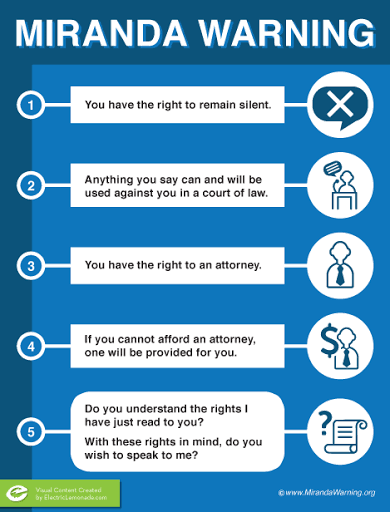
MINIMAL STATEMENTS - Only answer what you are asked. Remember this quote from the Miranda rights: anything you say can and will be used against you. They mean it!
NEVER CONFIRM ANYTHING - You should never admit to or confirm anything. This is very easy to cross-examine and will get you in more trouble.
NEUTRALITY - Have a neutral expression and do not instigate anyone. Be almost like a robot; they can use your change in breathing or posture as a sign of guilt.
DENIABILITY - Deny any allegations that can be used against you. Remember, they don't have proof.
In 1989, a group of teenagers was accused of raping and beating a woman in Central Park, New York. Police collected semen samples from the victim that did not match any of the teenagers’ DNA, but investigators ignored that evidence and relied instead on confessions. The teenagers did not follow the rules I outlined above , specifically, the neutrality rule; out of fear they confessed to committing the crime. Neutrality must go both sides: while you cannot instigate your interrogator, you also cannot let them instigate you. Otherwise, it will only lead to your loss.
Jeff Pearson Case in Georgia, USA
In 2011, a man in Georgia, USA was accused of committing an armed robbery in a local 7/11 shop. The man successfully defended himself during an interrogation with the police, ultimately avoiding a lengthy prison sentence.
Now you may ask, how did he do that? Well I hope that this question is an oxymoron, because I just told you how! Jeff Pearson used his right to remain silent and his right to counsel to legally avoid answering any questions. Since the police didn't have proof proving it was him, they were purely relying on getting a confession to convict him.
While he didn't exactly follow the rules I listed above and didn't exactly stay neutral, he still got away with it as he had his rights. If you don't have the rights, especially if you live in an authoritarian government, follow the rules at all costs.
Long story short, if you live in the USA, you can easily dodge an interrogation.

Liu Hui Case in China
We’ve looked at interrogation cases from the United States, where suspects’ rights are protected. Now we’ll look at a case from China, where the rules are essentially the opposite.
In 2015, Chinese Journalist Liu Hui was accused of spreading rumors online. The Chinese Police took him to custody, and tried extorting him into confessing, saying that he would spend years behind bars and that his wife would otherwise abandon him. Liu, being smart, did not fall for the tactics of the police. After a year of trying to get a confession out of him, he was released with no charges.
No matter where you are, you can always dodge an interrogation.
The Complex of the Cops
Cops, during an interrogation, are literally trying to do everything to get a confession out of you. In fact, they are trained to do so. Some even go lying and bluffing to you saying that you did something bad and claiming that they have proof against you (even though they don't). Remember, I said it before and will say it again: the reason you are being interrogated is that they do not have concrete proof of you being the perpetrator of a crime.
Having said that, you must have this phrase in mind: guilty until proven innocent.
For more information, consider checking this video out, which showcases how one, if calm and mindful, can dodge the psychological tricks of cops during an interrogation.

Conclusion
In this tutorial, you learned what to do during a police interrogation against you. To sum up, you should follow the rules listed above, and you should also use the rights I mentioned if applicable in your jurisdiction.
However, if the police want to interrogate you, there is definitely something wrong with your OPSEC. Fix it before it's too late!
 Suggest changes
 petrified
 2026-05-14
 Donate XMR to the author:
834EJCPE8ZBCairREyP3Ft6XpKDvtN8ki9i7eqLud5midPBztuRiHwV5JpjViT55mVSFoYTogfCjc2n4fwMCr3wyRVAunXU